
What is a Prequalified Welding Procedure Specification

A prequalified welding procedures specification is a welding procedure that is exempt from the qualification tests required by a code or standard. Not all codes provide the user with the advantage of using prequalified welding procedures. Some that do are: AWS D1.1 Structural Welding Code – Steel AWS D1.3 Structural Welding Code – Sheet […]
How to Develop a Welding Procedure Specification
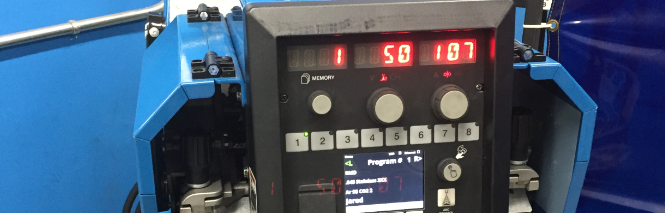
Developing, or writing a welding procedure, goes far beyond setting up amps and volts. It entails the selection of many variables which fall under the 9 required components of welding procedure specifications we discussed last week. Today we look at those 9 components again, but rather than just stating what they contain we explain how […]
9 Required Components of Welding Procedure Specifications
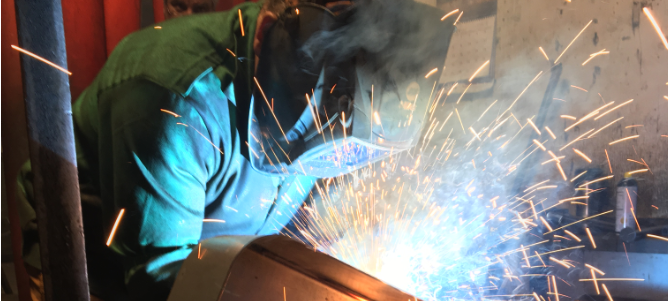
Regardless what position you hold, if you work in the welding industry you have heard of welding procedures specifications (WPSs). To some, a welding procedure simply means the selection of a few variables such as amps and volts. To others, these are the documents that govern all welding done in their facility. A […]
5 Building Blocks of a Weld Quality Control System
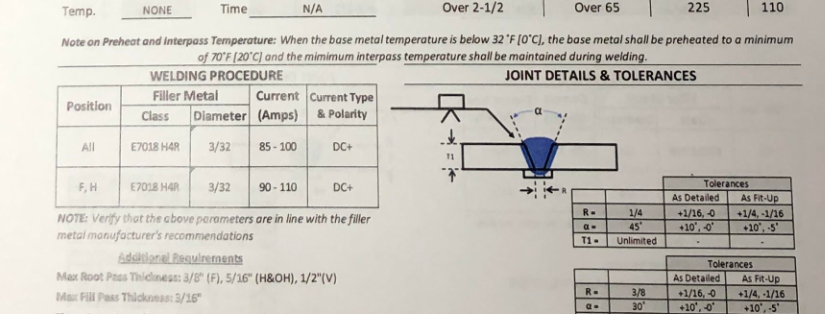
Controlling weld quality is not always an easy task. Many fabricators struggle to manage the amount of rework, the discrepancies from one batch of product to the next, and the varying levels of productivity and workmanship amongst their welders. This inability to control weld consistency is not surprising. Welding has more than 20 variables that […]
Rule of Thumb for Fillet Weld Sizes
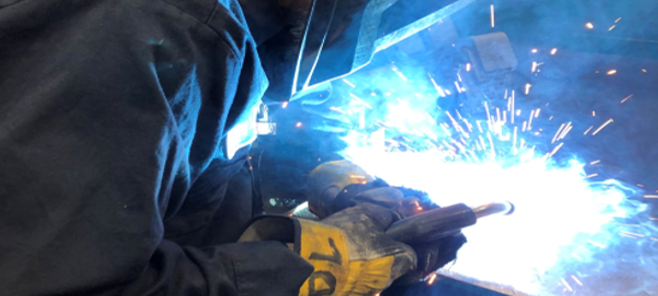
Many fabricators can lower their welding costs significantly if they paid close attention to weld sizes. If a print calls for a ¼” fillet weld and in production you make a 5/16” fillet weld, you are overwelding by 56%! If the print calls for a 3/16” fillet, the 5/16” fillet weld you deposit would be […]
Steps to determine if welding preheat can be eliminated?
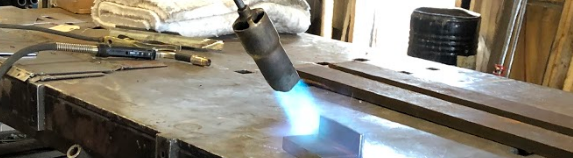
As discussed in our previous article, and many times in the last 50 or so, preheat is necessary in steel welding to control the cooling rate. More specifically, preheat is used to slow the cooling rate down in order to prevent excessive hardness in the heat affected zone (HAZ) which can lead to cracking. Before […]
Factors Affecting Cooling Rates of Welds and Heat Affected Zones

Our next article will discuss a question we are asked quite often: Can we eliminate preheating before welding? Preheating is necessary to slow the cooling rate down after welding which in turn avoids excessive hardening of the weld and heat affected zone. Eliminating preheat can lead to hydrogen induced cracking and catastrophic failure. A […]
Why More Customers are Requiring Qualified Welding procedures
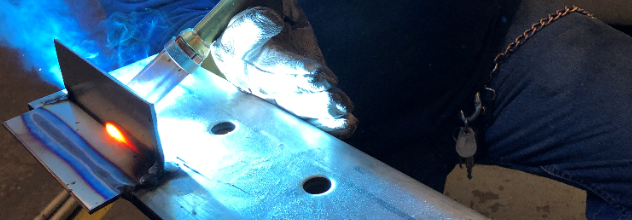
If you own or work at a job shop you may have noticed an increase in the number of customers that require the use of qualified welding procedures to build their products. Some fabricators are even getting this request from long time customers who never required them in the past. So why is this? The […]
Which Arc Welding Process is the Most Efficient?
This question can be answered very quickly. Gas Metal Arc Welding (GMAW) and Submerged Arc Welding (SAW) can have 98-99% deposition efficiency. However, the question is a bit more complicated since when we talk about efficiency we don’t just care about deposition efficiency (how much of the electrode becomes weld metal). What we care about […]
Causes of Porosity in Submerged Arc Welds
Submerged arc welding is typically done automatically, meaning it is not done by hand, but rather set up as hard automation. The operator simply controls the welding machine and torch position to obtain the desired results. Typically,the system is run by an operator, not a welder. So when problems come up, the operator may not […]