Subscribe to get our latest content by email.
Weld cracking is one of the most serious problems a fabrication shop can face.
Unlike many other weld discontinuities, cracking is rarely cosmetic. Most welding codes allow little to no tolerance for cracks, and when they appear, repairs are often extensive, costly, and disruptive to production schedules.
What makes cracking especially difficult to deal with is that it often appears after welding is complete—sometimes hours or even days later—when the job is already assumed to be finished.
Because of this, weld cracking cannot be solved through quick adjustments or trial-and-error fixes. It requires a deliberate, systematic troubleshooting approach.
This article is part of the Practical Weld Troubleshooting in Production series, which focuses on diagnosing and correcting weld problems using repeatable, engineering-based methods rather than guesswork.
One of the biggest challenges with weld cracking is that many shops treat it as a single problem with a single cause.
In practice, cracking can result from:
When cracking is treated as a generic defect, troubleshooting efforts tend to focus on surface-level fixes that do not address the real cause.
The most common mistake made when cracking is discovered is immediately changing welding parameters.
Before any changes are made, it is critical to gather information and conduct a proper failure analysis. Required informaiton includes, but is not limited to:
Cracking patterns contain valuable information. Cracking location is also critical as it can eliminate certain root causes right away. Ignoring patterns and location lead to wasted effort and repeated failures.
Cracking is rarely caused by a single variable.
It is usually the result of multiple contributing factors acting together, such as:

Changing one variable without addressing the others may reduce cracking temporarily, but it often does not eliminate it.
This is why cracking problems frequently return.
One of the most influential factors in weld cracking is how quickly the weld cools.
Low heat input procedures, thick sections, cold ambient conditions, or base metal with high coefficient of thermal diffusivity canl accelerate cooling. Rapid cooling increases hardness in the weld metal or heat-affected zone, making the weld more susceptible to cracking.
In some cases, cracking is not caused by “too much heat,” but by not enough heat applied in a controlled way.
Hydrogen-related cracking is one of the most common cracking mechanisms in carbon steel fabrication.
Sources of hydrogen include:
Hydrogen problems are especially difficult because they may not show up immediately. Cracks can form hours or days after welding, long after the weld appears acceptable. Proper inspection procedures involve inspection 48 hours after welding as some hydrogen induced cracks can take that long to manifest on the surface of the weld or heat affected zone. A well developed Welding Quality Standard should clearly specify inspection procedures in order to prevent hydrogen induced cracking.
When cracking is delayed, hydrogen must always be considered as a potential contributor.
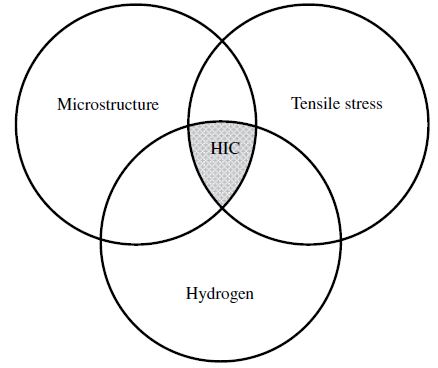
Even well-developed welding procedures can produce cracks if joint design and restraint are not considered.
High restraint prevents the weld from contracting as it cools, increasing residual stresses. When those stresses exceed the ductility of the weld or heat-affected zone, cracking occurs.
Common contributors include:
Addressing restraint often requires changes beyond welding parameters alone.
While this article does not focus exclusively on crack classification, understanding crack characteristics is still essential.
Knowing whether a crack formed:
helps narrow the list of likely causes and prevents wasted troubleshooting effort.

Crack characteristics guide investigation—they should not be ignored, but they should not be treated as the only answer.
Effective weld cracking troubleshooting follows a structured process:
This approach prevents reactive decision-making and builds long-term reliability into the welding operation.
This article is part of the Practical Weld Troubleshooting in Production series.
You can find the full series here:
Practical Weld Troubleshooting in Production – Series Hub
For a more detailed breakdown of cracking mechanisms, contributing factors, and corrective actions across different materials and welding processes, Weld Troubleshooting for Non Welding Engineers serves as a comprehensive reference.
The guide walks through cracking and other weld discontinuities using the same systematic approach outlined in this series, making it a practical tool for resolving both isolated issues and recurring problems.
For more information CLICK HERE or the image below.