
Which is the best shielding gas for MIG welding?

Today we received two different requests for help pertaining to shielding gas selection. The first caller requested a chart that tells them what materials can be welded with the different shielding gases that they had. They wanted a chart that can be provided to the welders to make sure they used the right gas on […]
7 Ways To Control Distortion in Welding
Distortion is a nasty problem we experience in welding. Understanding what causes distortion is important in order to be able to minimize or eliminate it completely. There are physical and mechanical properties that affect distortion susceptibility of materials. To learn more about this you can read 4 Material Properties That Affect Distortion. As fabricators we hardly […]
Short-arc vs Globular Transfer in GMAW

What is the difference between globular and short-circuit transfer? Short-circuit is a mode of metal transfer in GMAW in which metal is transferred from the electrode to the weld pool via a series of electrical shorts. When the electrode (wire) touches the base material a short occurs and the arc goes out. At this point […]
Etching Solutions for Steel, Stainless, Aluminum and Other Metals

The qualification of welders and welding procedures often involves macro-examination of welds. Performing macro-etches is a relatively simple procedure, but strict guidelines must be followed to ensure safety. Most chemicals used in etching solutions are hazardous and must be handled accordingly. Any person etching with these chemicals must familiarize him or herself with the corresponding […]
Why You Must Have Welding Procedure Specifications
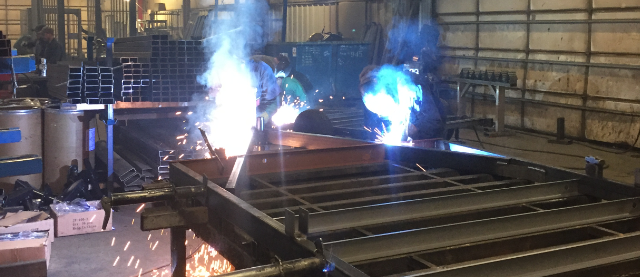
Our previous article discussed the importance of having a specification for weld quality. In this article we’re talking about the importance of one of its basic components: Welding Procedure Specifications (WPSs). Many fabricators don’t have WPSs. They rely in the experience of their welders to select the right parameters. As much as we want every […]
Can you really weld a broken heart?
If you have had your heart broken you’ll know there is no way to repair it; however, fortunately for us fabricators we do not have to weld broken hearts. If you have been out in the field at least a few times you are probably familiar with the saying “I can weld anything from the […]
Importance of Implementing a Specification for Weld Quality

If you have been reading our articles for some time you know how strongly we feel about having documented welding procedure specifications which have been qualified by testing or prequalified in conformance with code requirements. Yet when we recommend that these very important documents be developed and used in production we get a lot of […]
How to Weld Quenched and Tempered Steels

It is often incorrectly assumed that quenched and tempered (Q&T) steels are hard to weld or even completely unweldable. This assumption is inaccurate as most Q&T steels have great weldability. However, extreme care must be taken to prevent cracking or loss of certain mechanical properties. A very common quenched and tempered steel is ASTM A514. […]
7 Ways to Eliminate Porosity in Your Welds
Porosity is a weld discontinuity that is not as detrimental to structural integrity as cracks, undercut, overlap and lack of fusion. However, it is unsightly and when painted it becomes an eye sore. Because it does not have sharp ends, porosity does not propagate like a crack. The reason for limits to the amount of […]
Weld Toughness vs Weld Strength

If you have ever been tasked with selecting the right specification and grade of steel for a particular application you know there are hundreds of choices. Typically these are based on the materials tensile strength and yield strength. There are many factors that go into selecting the right base metal for a given application. In […]