Subscribe to get our latest content by email.
In most organizations, welding procedures exist because they are required. They are created to satisfy a code, meet a customer requirement, or pass an audit. Once the document is complete, approved, and filed, the assumption is that the work is done. Yet this is precisely where many welding programs begin to struggle. The issue is not that procedures are missing. The issue is that procedures are often written, but never truly developed. This article is part of the Developing Welding Procedures in the Real World series, which examines how welding procedures are developed, implemented, and used in real fabrication environments.
A Welding Procedure Specification (WPS) is often treated as a form to be filled out. Information is gathered, boxes are checked, and values are entered. As long as the document meets code requirements and includes the necessary variables, it is considered complete. This approach focuses on documentation, not decision-making. When a procedure is written this way, the emphasis is on:
From an administrative standpoint, this may be sufficient. From a production and quality standpoint, it rarely is.

Developing a welding procedure is fundamentally different from writing one. It requires evaluating how a weld will actually be made, under real conditions, by real people, using real equipment. Every variable selected during development represents a choice—one that affects quality, productivity, cost, or all three. When welding engineers develop procedures, they are not focused on completing a document. They are focused on making decisions in the correct sequence. Those decisions include:
The WPS is simply the final output of that process.
When procedures are only written, they tend to look correct on paper while failing in practice. Common symptoms include:
These are not execution problems. They are development problems. A procedure that was never engineered for production conditions cannot be enforced effectively, no matter how well it is documented.
One of the most common mistakes in welding procedure development is treating welding variables as independent. Amperage, voltage, travel speed, filler metal, joint design, and preheat are often selected individually, without considering how they interact. In reality, every change affects multiple outcomes. For example:
Writing a welding procedure records these variables. Developing a welding procedure evaluates how they work together.
Many procedures are developed based on what has “worked before.” While experience is valuable, it is not a substitute for a structured development process. What worked on one material, thickness, or joint configuration may not translate to another. This is why welding engineers rely on a repeatable methodology. They do not assume success—they validate decisions before production begins. Without that discipline, procedures tend to evolve reactively:
At that point, the WPS no longer controls the process.
A properly developed welding procedure reflects the thinking that occurred before it was written. It communicates:
When a procedure is developed this way, it becomes a reliable tool rather than a reference document that sits unused.
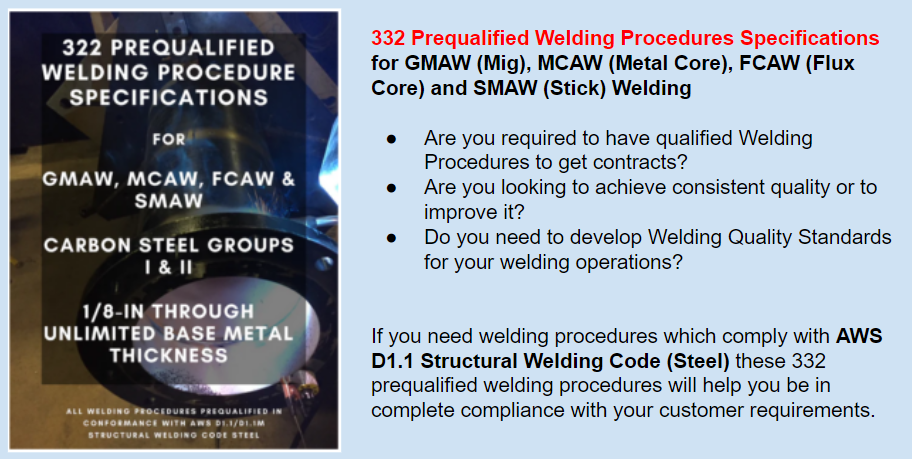
This article is part of the Developing Welding Procedures in the Real World series, which examines how welding procedures are developed, implemented, and used in real fabrication environments.
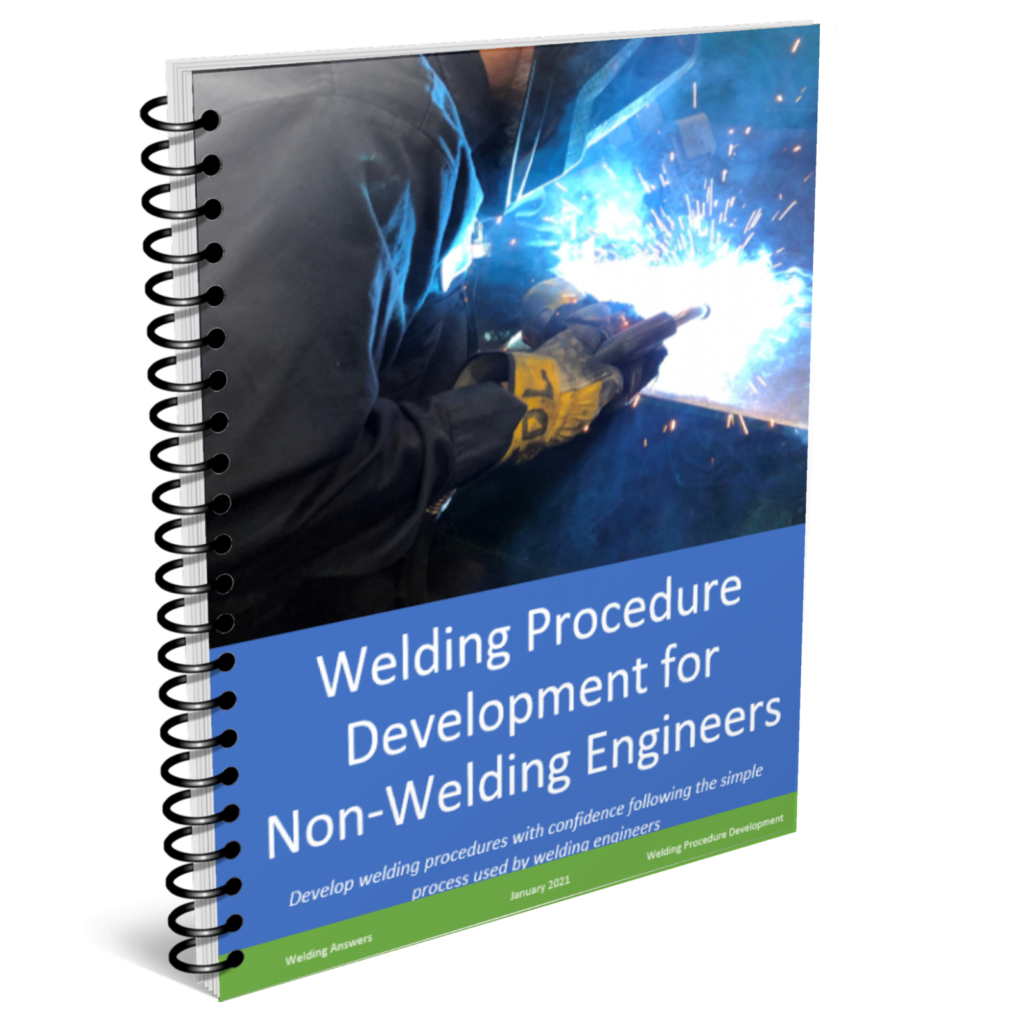
The distinction between writing and developing welding procedures is foundational to effective welding programs. A structured development process ensures that procedures are not only compliant, but also usable, repeatable, and economically sound in production environments. That process is documented in Welding Procedure Development for Non-Welding Engineers, which was created to provide a step-by-step framework for developing welding procedures across a wide range of materials and fabrication scenarios.
Reference:
Welding Procedure Development for Non-Welding Engineers